
Montgomery County Traffic Warrants Explained
A traffic ticket sets two duties. Pay it if payment is allowed, or show up in the court printed on the citation. Skip both and the judge can issue a bench warrant or another order for arrest. There is no fixed Montgomery County timetable or standard fee for that step, so the issuing court has to explain what your case actually requires. Where the case lives depends on the ticket itself. Montgomery County Probate Court handles county misdemeanor traffic citations, while a city citation may belong to a municipal court, including Mount Vernon's. The court named on the citation controls the case, not the place where the officer pulled you over. And remember this is a court-record question, not a driving-history or insurance search.
Montgomery Traffic Warrant Schedule
Traffic court in Montgomery County runs on a published schedule. The Montgomery County Probate Court sets traffic court for the second Wednesday of each month at 10:00 a.m. and asks attendees to arrive before 9:45 a.m. Knowing the docket day helps you plan, but it does not prove your case sits on that calendar or that no warrant exists. Call before you drive anywhere. Court operations can shift, including during a judicial emergency. Ask the clerk to confirm your appearance date, whether the citation can be paid without appearing, what identification to bring, and whether a missed date already produced a court order. The courthouse and the Sheriff's Office are two different destinations, so know which one you need.
Checking for a Traffic Warrant
Start with the court named on the citation. Have the citation number, your name, date of birth, and jurisdiction at hand, since the clerk will ask for them in a private exchange. Montgomery County offers no public traffic-warrant search and no statewide public warrant portal.
- Read the citation and identify Probate Court or the named municipal court.
- Use an official payment lookup only if that court says the case is eligible.
- Call the clerk when no result appears, since a payment portal is not a warrant index.
- Ask the Sheriff's Office about service only after confirming the court and current visit risks.
- For an existing public record, send a focused request to the office that maintains it.
Montgomery Traffic Warrant Payment Search
Montgomery County Probate Court links to EZCourtPay for eligible traffic payments. The service asks for a citation number, date of birth, and jurisdiction to pull up a payable citation. A match there is not a full Montgomery County warrant search, and a missing result cannot confirm that no order exists. Payment eligibility and court status are separate questions too. Some matters require an appearance no matter what. A payment can also take time to reach every connected system, so ask the clerk directly whether the court has recalled or closed any warrant and whether it sent the required release for a state licensing consequence. Keep your receipt and confirmation either way.
Inside a Montgomery Traffic Warrant
Georgia's uniform citation form carries fields for the court, county, alleged offense, appearance date, and case identifiers. Court-use sections record later action. Public access varies, and Montgomery County has published no local traffic-warrant number pattern.
| Citation or case number | Links the ticket with the court record. |
|---|---|
| Alleged offense | States the cited traffic charge, not a finding of guilt. |
| Issuing court | Identifies Probate or municipal jurisdiction. |
| Fine or bond | Case-specific amount, if set; no general Montgomery amount was found. |
| Status | May show open, paid, recalled, reset, or unknown; confirm with the clerk. |
Montgomery Traffic Warrant Routes
Mount Vernon's official links offer a municipal-court calendar and a payment route, not a warrant roster. Its calendar sets municipal court for the third Tuesday at 4:00 p.m. The city Police page and City Hall page list different locations, and a City Hall move notice takes effect August 31, 2026, so confirm your destination first. Ailey, Uvalda, Higgston, and Alston have no separate public warrant portal. That absence is not proof a city lacks court records. Contact the city clerk, follow the court named on the citation, and loop in the Montgomery County sheriff only when the court says county service or custody is involved.
How to Pay or Lift a Traffic Warrant
Never assume paying alone closes every part of a case. Ask the issuing court first for the exact status, the permitted response, and the current amount. Montgomery County offers no general payment plan, amnesty program, or same-day recall promise. If you want to contest the citation, treat payment as a real case step, not a neutral lookup. Paying can affect the outcome, while a required appearance may follow a different process, so ask the clerk about your choices before acting. When a lawyer is involved, hand over the citation and case identifiers so the court record can be checked directly.
- Confirm the citation, court, warrant status, and amount directly with the clerk.
- Pay through an approved channel when allowed, or obtain an appearance date.
- Ask counsel about bond or other court action if the matter cannot be paid.
- Request confirmation that the warrant was recalled and any DDS release was sent.
Warning: A receipt is not instant proof of recall. Confirm the court record and any separate DDS release before relying on the payment.
Montgomery Traffic Warrants and DDS
The Georgia DDS failure-to-appear guidance lays out an administrative process that starts once DDS receives court notice. It covers a 28-calendar-day period and a court release process. That state timeline governs driving privileges, not the issue date of a Montgomery County warrant.
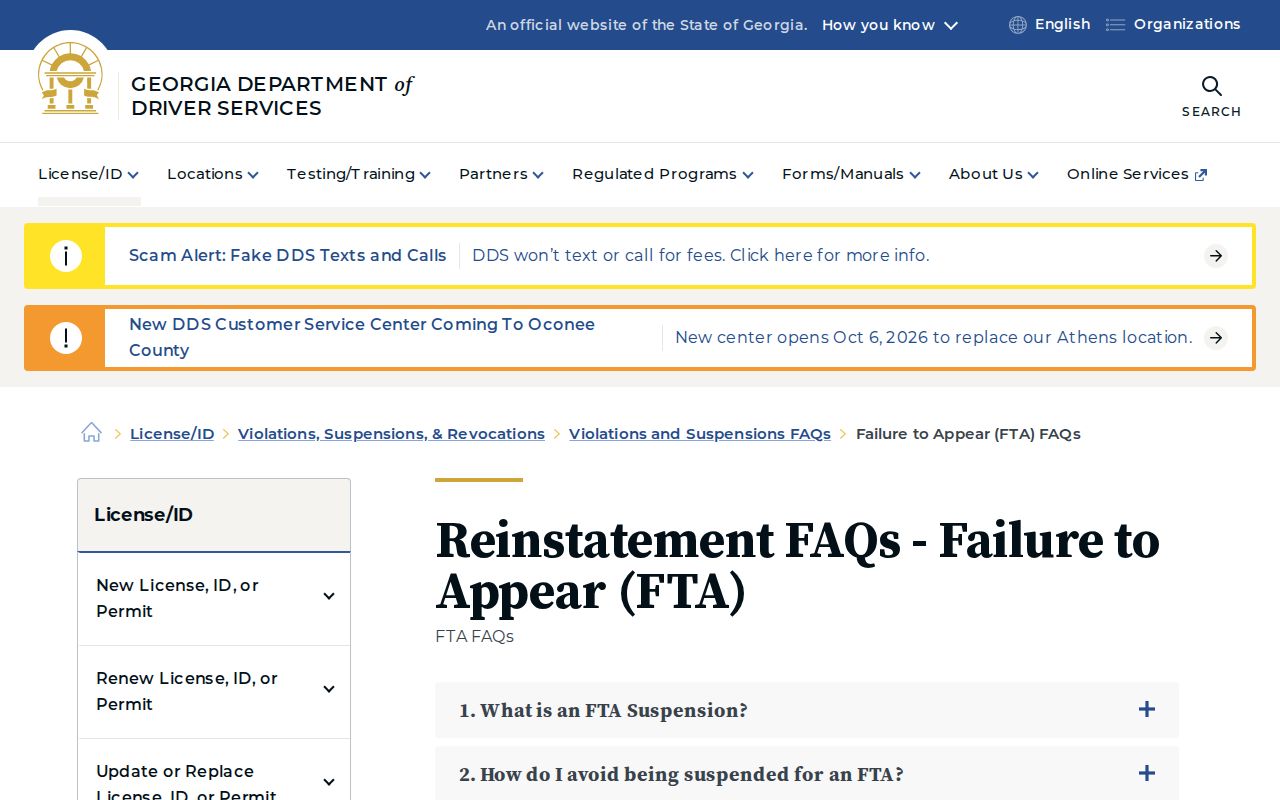
The DDS page explains the license side, but Montgomery County Probate Court or the issuing city court must confirm the warrant itself. The court controls the citation and any warrant. DDS controls the state license record after notice. Resolve the court matter first, then follow DDS instructions for reinstatement if required. A DDS screen cannot confirm the underlying warrant, and a court payment screen may not show current license status.
Traffic Warrants, FTA, and License Holds
One missed traffic duty can spawn connected records, but the terms are not interchangeable. A failure to appear is the missed court obligation. A warrant is a judicial order. A license action is an administrative consequence recorded by DDS in Montgomery County cases.
| Mechanism | What Triggers It | What It Does |
|---|---|---|
| Traffic warrant | Court action after noncompliance | Authorizes custody |
| Failure to appear | Missed required court date | Prompts court and reporting action |
| License consequence | DDS receives court notice | Affects driving privilege until release and reinstatement |
Request Montgomery Traffic Warrant Records
A Georgia Open Records Act request works for records that already exist. Think traffic policies, citation files, fee schedules, and reports stripped of personal identifiers. It cannot make an agency build a fresh Montgomery County warrant table. Name the court, the date range, the record type, and how you want it delivered. Aim each request at the office that holds the item. Probate Court keeps its own citation file. A municipal clerk keeps that city's records. The Sheriff's Office may share service information, but it cannot recreate a court docket. If an office redirects you, note the new custodian and narrow your description rather than blasting the same broad demand across Montgomery County. Expect redactions. Copies may mask birth dates, addresses, juvenile details, victim information, or protected investigative facts. A records response also moves too slowly for a same-day custody question. For your own current status, call the issuing court and the Sheriff's Office instead. Montgomery County has no public mobile app, no mail lookup, no fax lookup, and no dedicated Montgomery traffic-warrant phone line. PeachCourt, an account-based system, serves Superior Court documents rather than a traffic-warrant index. GCIC admits only criminal-justice users. County and city calendars list events, not live order status. Phone calls, clerk windows, in-person visits, and focused records requests remain the practical channels in Montgomery County. Before you drive over, ask whether the inquiry could end in custody and confirm you have the right building.