
Montgomery County Bench Warrants Explained
A bench warrant is a judge's answer to an unmet obligation. Skip a required appearance in Montgomery County, leave a fine unpaid, or ignore an order, and the bench may respond. The warrant ties back to an existing case or citation, which is why the issuing court matters more than any broad web search. County paperwork is not guaranteed to use the word "capias." Instead you may see "order for arrest" or "failure to appear" on the docket. Ask the clerk what the entry means in that court. Two assumptions also trip people up. Not every absence produces a warrant at once. A payment alone does not cancel one, either.
After Missing Montgomery County Court
Do not lean on a calendar, a payment screen, or word of mouth. Find the case or citation number. Then call the clerk of the Montgomery County court that set the date. Ask whether the record shows a missed setting, a bench warrant, a reset, a payment requirement, or a new date to appear. The clerk can walk you through public procedure but cannot give legal advice.
- Read the court name and case or citation number from the notice.
- Call the clerk and ask for the current docket and warrant status.
- Ask what court action is allowed, such as a reset, appearance, payment, or motion.
- Consult counsel when the matter is criminal or an in-person inquiry could lead to custody.
- After action is taken, confirm that both court and service records reflect it.
Calling the clerk before a known absence is smart. Still, no promise follows. The Montgomery County court may excuse the absence or let the warrant issue anyway.
How Montgomery County Bench Warrants Are Issued
The judge assigned to the case chooses the response when an obligation goes unmet. Court staff record the order, and a sheriff or police agency may later serve it in Montgomery County. That split is practical. The clerk can describe the docket entry, while the serving agency handles custody and execution questions. Georgia Magistrate Court rules call for a prompt first appearance after arrest and recognize cash, property, recognizance, and professional bonds as general categories. Montgomery County publishes no local bench-warrant bond schedule, so assume no amount. A judge also decides whether a warrant gets recalled, a setting is reset, or an appearance is required.
No Public Montgomery County Bench List
Montgomery County has no online bench-warrant lookup by name. The sheriff's page and the county court pages simply do not offer one. Calendars show dates and events, not current warrant status. PeachCourt gives account-based access to some Superior Court documents, but it is not a warrant index.
Quick answer: Start with the court that set the missed appearance, because Montgomery County offers no official online bench-warrant lookup.
The sheriff still has a role once the court confirms service or custody in Montgomery County. Georgia.gov warns that an in-person warrant inquiry can end in immediate arrest. Call first. Consider legal advice before you go.
Bench Warrants and Arrest Warrants Compared
Both orders can put a person in custody, but they start at different points. A Montgomery County bench warrant answers a missed obligation inside an existing case. An arrest warrant follows a probable-cause showing tied to an alleged offense. A summons, by contrast, directs a response without that immediate warrant mechanism.
| Feature | Bench Warrant | Arrest Warrant |
|---|---|---|
| Common basis | Missed date, unpaid fine, or failure to comply | Probable cause concerning an alleged offense |
| Starting record | Existing case, citation, or order | Sworn information presented to an authorized judicial officer |
| Best first contact | Clerk for the court obligation | Issuing court or sheriff, with counsel |
| Possible next event | Recall, reset, payment, appearance, or service | Service, first appearance, bond hearing, or preliminary hearing |
The label on the court record controls the type. Never infer it from a web summary. Check with the Montgomery County clerk instead.
Montgomery Magistrate Court’s Warrant Role
The Magistrate Court page lays out the court's warrant work. It executes arrest and search warrants for law-enforcement agencies, handles first appearances and bond hearings, conducts preliminary hearings, and takes civilian warrant applications. The court stays available around the clock for warrant execution. That round-the-clock statement describes judicial availability for officers, not a public records counter open all night, and the official court source carries the court's own contact details for Montgomery County.
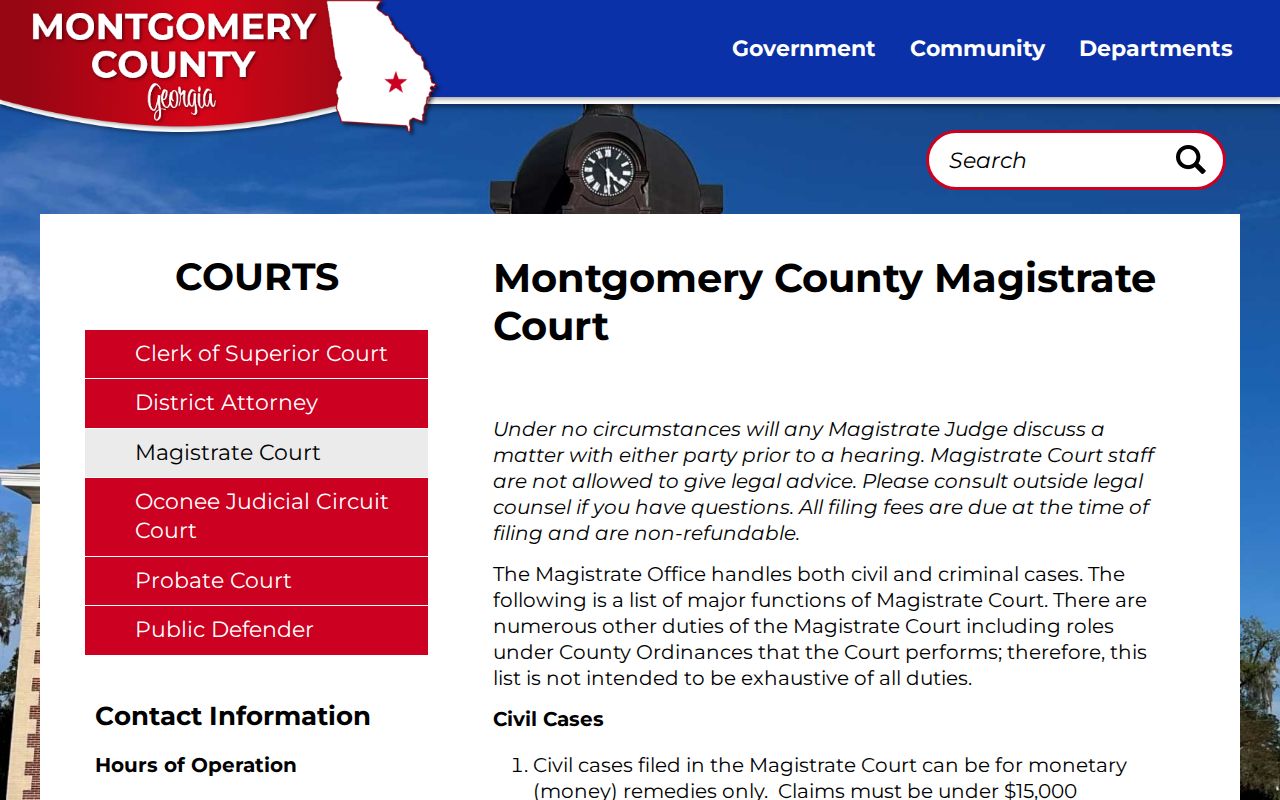
The page names Chief Magistrate Ashley Thornton and lists 912-583-2170. It also cautions that the Montgomery County court cannot give legal advice, and a magistrate cannot discuss a matter before a hearing.
Resolving a Montgomery County Bench Warrant
Fixing a bench warrant rests with the issuing court. Depending on the case, the path may involve an appearance, a reset, authorized payment, a bond, or a motion asking the judge to recall or quash the warrant. An attorney can pull the docket, contact the court, and plan a voluntary appearance. No step works in every Montgomery County case.
Before taking action: Confirm the court, case number, warrant status, and allowed next step, then ask how and when the court records a recall.
Keep any receipt, order, or clerk confirmation you get. A payment portal may not reflect a same-day change in the court or sheriff system. The Montgomery County warrant overview offers broader resolution context, but the issuing judge controls the case.
Montgomery County Traffic Dates and FTA
Traffic citations in Montgomery County land in Montgomery County Probate Court. That court hears misdemeanor traffic matters on the second Wednesday of each month at 10:00 a.m., and anyone appearing should check in before 9:45 a.m. The schedule helps you plan. It is not a bench-warrant status page, though, so treat it as calendar information only. When no appearance is needed, Probate Court takes payment through EZCourtPay or by phone. Have your citation number and date of birth ready, and list Montgomery County Probate Court as the jurisdiction. Pay only where the court allows it. Ask the clerk whether a separate failure to appear or warrant action still needs resolving, since paying a ticket does not always recall a warrant. Georgia DDS may get an FTA notice too. Under the state FAQ, the administrative suspension takes effect 28 calendar days after DDS receives it. DDS cannot tell you the status of the county bench warrant. Only the issuing court controls that record and any release.
Mount Vernon Court and City Bench Warrants
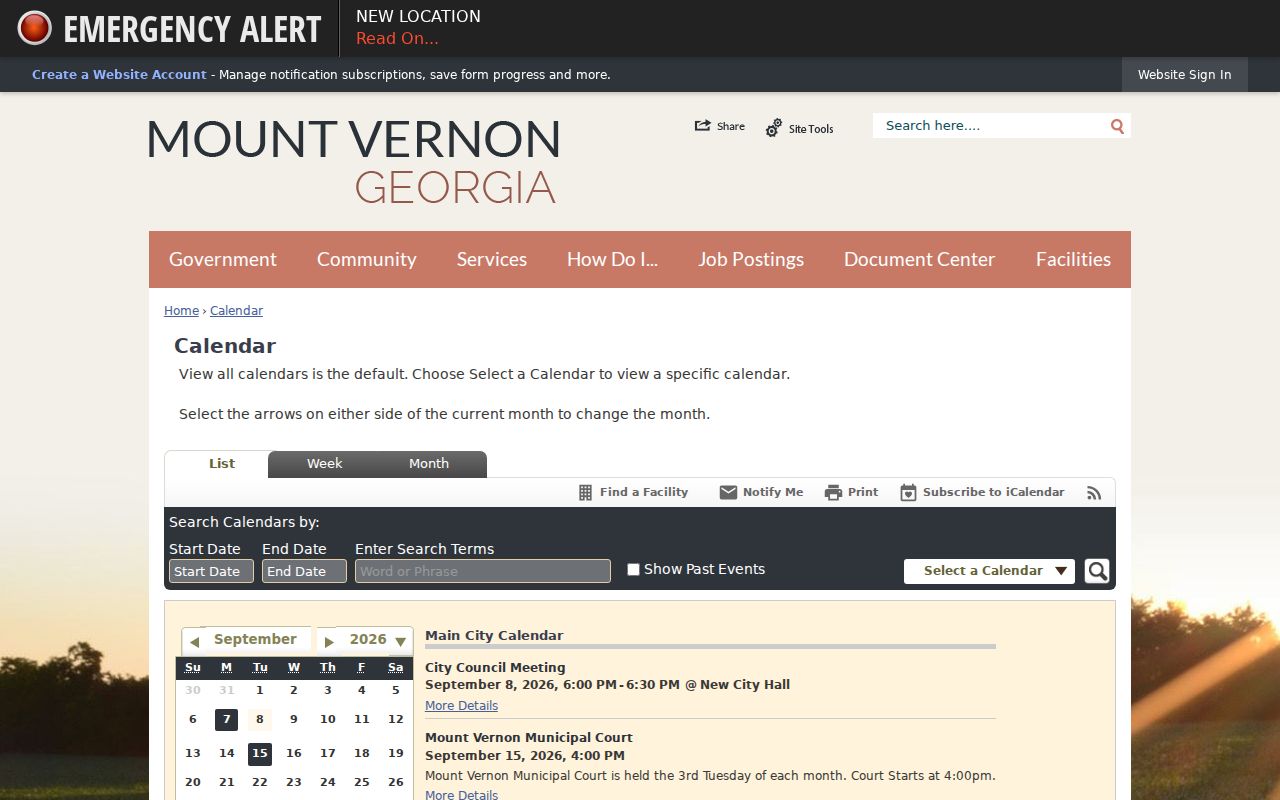
Mount Vernon, the Montgomery County seat, keeps a municipal-court calendar, a clerk email, and payment links on its official pages. Court convenes the third Tuesday of each month at 4:00 p.m., per the city calendar. The Quick Links page describes the citation portal as payment-only. So do not mistake it for a bench-warrant lookup or proof that a warrant was recalled. The official Mount Vernon calendar displays the city's scheduling interface, not a warrant list. Call the clerk for actual warrant status.
Addresses in Mount Vernon are shifting. The city Police page still lists 435 South Railroad Avenue, but City Hall has announced a move to 101 South Railroad Avenue effective August 31, 2026. Before you go anywhere, call 912-583-2323 and confirm which building handles your matter. Smaller Montgomery County towns like Ailey, Uvalda, Higgston, and Alston publish civic contacts, but none of them runs a public warrant portal. For any municipal matter, start with the court printed on the citation. Bring in the county sheriff only if the city confirms a transfer, county service, or county custody.
Finding the Court That Issued the Warrant
The paper trail tells you where to go. A Montgomery County traffic citation usually points to Probate Court. A Mount Vernon citation points to Municipal Court. Lower criminal matters and warrant applications can involve Magistrate Court, while felonies belong to Superior Court and the Clerk of Superior Court. State Court also sits in the local hierarchy. So use the exact court name on your paperwork instead of guessing from the charge.
| Probate Court | County misdemeanor traffic citations and the published traffic calendar. |
|---|---|
| Municipal Court | City ordinance, traffic, and missed-appearance matters for that city. |
| Magistrate Court | Lower criminal functions, warrant applications, first appearances, and preliminary hearings. |
| Superior Court | Felony case records through the clerk and available PeachCourt documents. |
| Sheriff’s Office | County service or custody confirmation after the issuing court is identified. |
Two separate buildings matter here. The Montgomery County courthouse sits at 400 South Railroad Avenue, while the Sheriff's Office is at 208 East Broad Street. Confirm hours and custody risk before any in-person visit.
Montgomery County Bench Warrant Access
Georgia's Open Records Act lets you request an existing policy, service log, non-identifying count, or other record the agency already keeps. It cannot force an office to build a new countywide bench-warrant report, and sealed, juvenile, protected, and investigative material stays off limits under court rules. Name the specific record, date range, office, and format you want. A Superior Court document may come through PeachCourt after account registration, while a municipal citation file stays with the city. The sheriff lists two phone numbers, 912-583-2321 and 912-583-2521; treat those as general contacts to verify, not dedicated Montgomery County warrant lines. An open-records reply rarely settles an urgent personal question. For your own status, work through the clerk and sheriff route, share identifying details privately, and talk with counsel before you appear.