
Montgomery County Municipal Court Warrants
Georgia municipal courts handle city ordinance and traffic matters within their own authority. A missed court date can trigger a warrant. That file is separate from a Superior Court felony case, a Magistrate Court warrant application, or a Probate Court traffic citation. In Montgomery County, start with the court printed on the citation. The city clerk usually holds the docket. Police or the sheriff may hold service facts. An empty sheriff page does not settle it. Jurisdiction is simply a court's legal power over a place and a case type. A citation written inside city limits may route to that city court. Other traffic matters belong to Probate Court. The issuing line on the ticket is the best clue, so describe the citation to the clerk when unsure and let Montgomery County staff name the office that owns it.
Mount Vernon Court Calendar
Mount Vernon posts a Municipal Court calendar for its Montgomery County municipal court on the city site. Court sits the third Tuesday at 4:00 p.m. A calendar lists events, not warrant status.
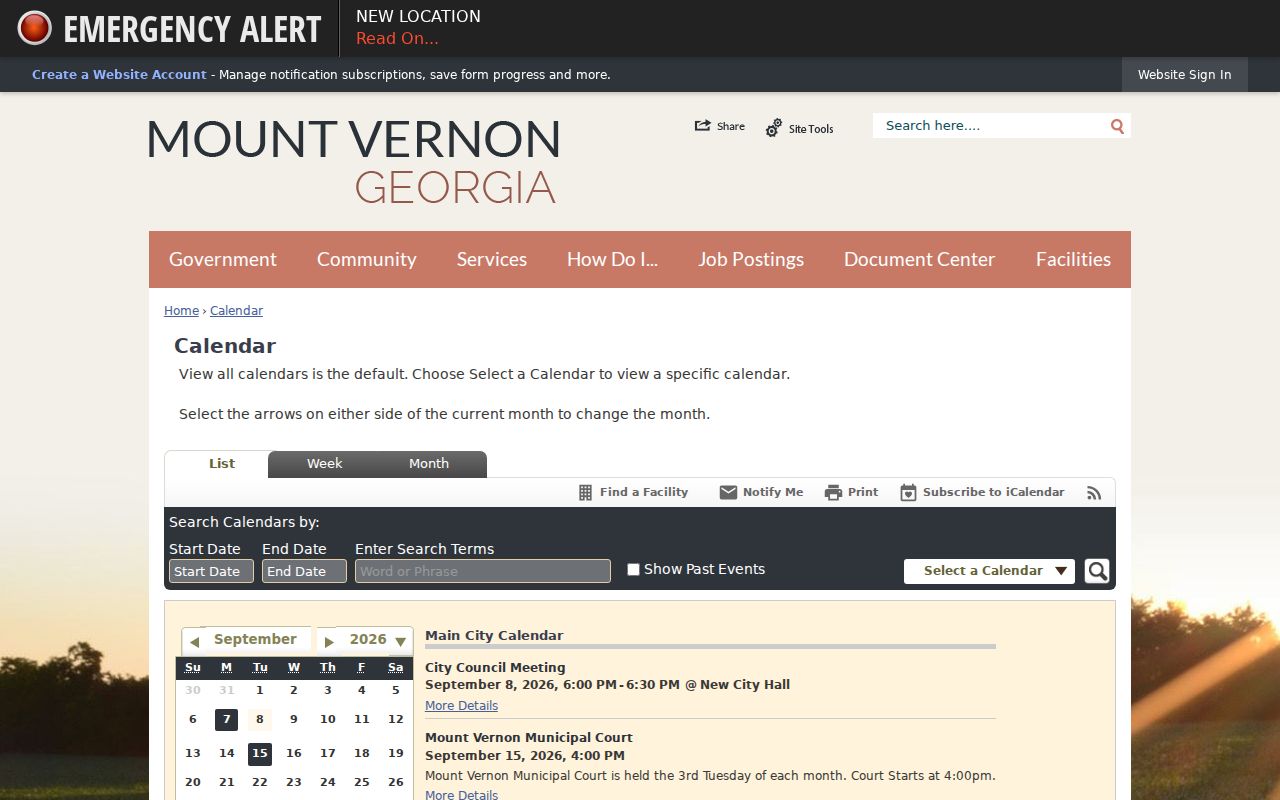
The calendar helps you plan a call, but only the clerk can confirm a warrant or a changed date. Check the hours before driving anywhere in Montgomery County. Court operations can shift.
Montgomery County Cities With Municipal Courts
Mount Vernon posts court, calendar, payment, and police channels. Ailey, Uvalda, Higgston, and Alston publish civic contacts but no public warrant portals. Court structures also differ across the five. These are Montgomery County's five largest incorporated communities under the 2020 Census. Population size does not measure court volume, though. A city profile may list a phone and address without showing that City Hall holds the court files. Ask the civic contact who keeps the records. Then confirm the answer at that office.
| City | Court | What It Handles |
|---|---|---|
| Mount Vernon | Municipal Warrant | City ordinance and traffic matters |
| Ailey | Confirm with city | No public portal located |
| Uvalda | Confirm with city | No public portal located |
| Higgston and Alston | Confirm with city | No public portal located |
Checking a Municipal Court Warrant
Keep the citation number, your name, date of birth, and city ready for a private clerk exchange. Never post a full birth date in an open records request. Montgomery County offers no public city or county warrant search online. One name can match many people. A citation or case number narrows the file. Ask the clerk to confirm the court, the alleged violation, required action, and current status. If phone staff cannot discuss status, ask what identification is required in person. Also ask whether appearing could lead to custody.
- Identify the court on the citation.
- Use its official calendar or payment tool only for the stated function.
- Call the clerk or police contact if online material does not answer status.
- Ask the sheriff only if the city confirms county service.
- Request an existing record from the maintaining city office when needed.
Mount Vernon Payment Links Have Limits
Mount Vernon's Quick Links page labels the municipal-court payment routes for this Montgomery County city. A portal can retrieve an eligible citation and accept payment. But it is no warrant search.
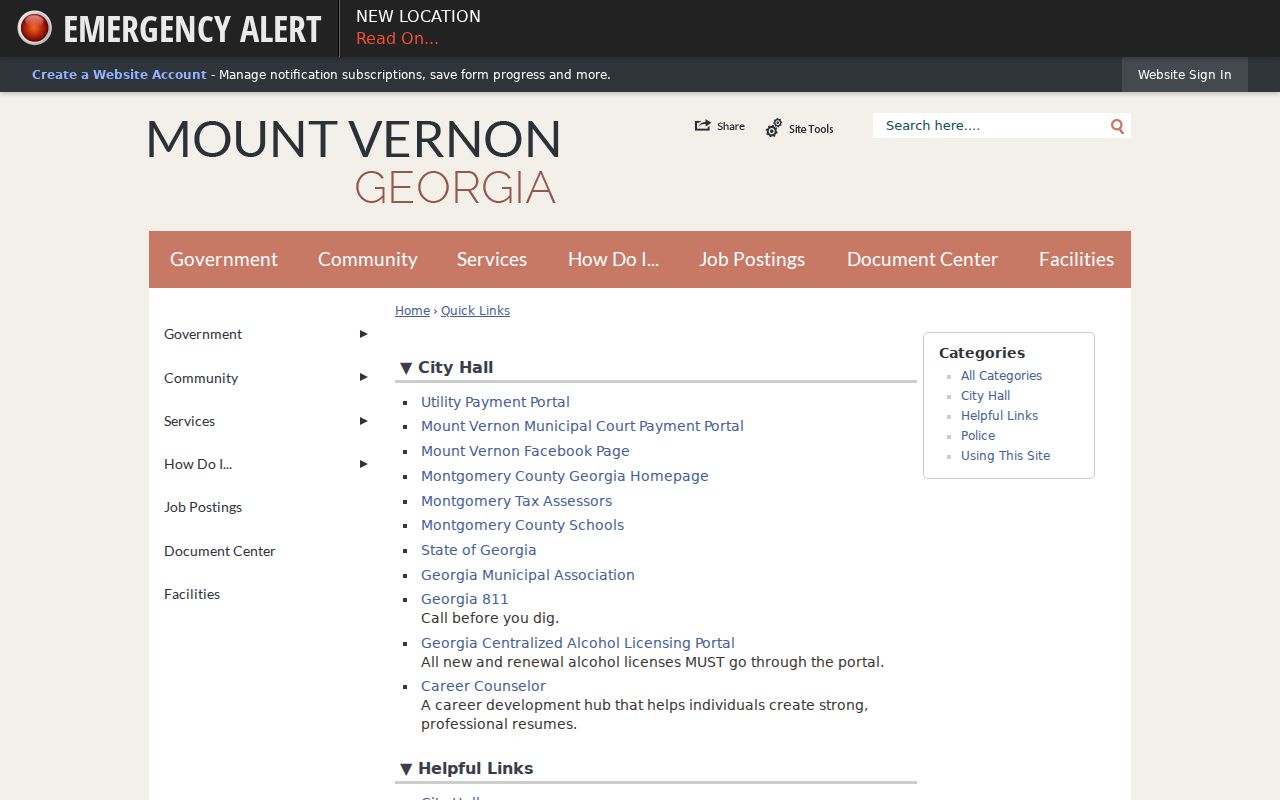
Those links route payments. They do not confirm warrant status in Montgomery County. After paying, ask the court whether it recalled the warrant and sent any required DDS release. A blank search result means little. The case may need an appearance, use another identifier, hold a recent entry, or sit in another court. Do not send repeat payments or guess at the jurisdiction. Give the clerk the citation details first, and ask whether payment is legally permitted before using the vendor.
Montgomery Municipal Warrant Flow
The surest path follows record custody. Start with the city clerk or the municipal court in Montgomery County. Ask whether the city still holds the matter. Ask whether city police carry service responsibility, or whether any service or custody function moved to Montgomery County. Add the Sheriff's Office only after that. If the citation names Montgomery Probate Court instead, follow that county court. Magistrate Court covers lower criminal functions and warrant applications. Superior Court holds the felony case records. Georgia.gov sends an unknown county warrant to the sheriff, but it does not merge these files into one statewide public search. The handoff matters most after a missed date. The city can explain what the judge ordered, police may know about city service, and the sheriff may only know what was transferred. Ask each office one narrow question, and write down the instructions, date, and case number so later confirmation does not depend on memory.
Inside a Montgomery Municipal Warrant
Montgomery County cities publish no local warrant-number format. Read every field with the issuing court, then confirm current status there. Issued means a judicial officer signed the order. Served means law enforcement acted on it. Recalled or quashed means the court withdrew the warrant, reset can point to a new hearing date, terms vary, and a payment or calendar entry proves nothing about which status applies.
| Case or citation number | Connects the order to the city file. |
|---|---|
| Alleged violation | Describes an ordinance, traffic, or FTA basis. |
| Issuing court | Identifies the clerk controlling the file. |
| Fine or bond | Case-specific, if set; no standard local amount was found. |
| Status | May be active, served, recalled, reset, paid, or unknown. |
Montgomery Municipal Warrant Destinations
Montgomery County stacks several addresses here. They are not interchangeable counters. Mount Vernon's Police page lists 435 South Railroad Avenue and 912-583-2323. The City Hall page announces a move to 101 South Railroad Avenue effective August 31, 2026. The county courthouse sits at 400 South Railroad Avenue, and the sheriff page uses 208 East Broad Street. Match the office to the case before you travel. Call ahead to confirm the current address, the public hours, and what identification the counter requires, and ask whether a walk-in warrant inquiry can end in immediate custody. A city hall contact may route a question without holding the court file itself. The Sheriff's Office adds a wrinkle: its current page shows 912-583-2321, while official jail material and the Georgia Sheriffs' Association show 912-583-2521. Neither is labeled a warrant line. Verify the right desk in Montgomery County, and ask whether a city matter reached county custody before you appear.
Montgomery Municipal Warrant Access
A public calendar is not the full case file. A payment result is not a warrant record. Public copies from a Montgomery County office may also leave out dates of birth, addresses, juvenile information, victim facts, or active-investigation details. The issuing court decides which record is public and what gets redacted. Under the Georgia Open Records Act guidance, request an existing record rather than a new one. Name the city, the record type, the date range, and how you want it delivered. An office generally need not build a list it does not keep. For your own current status, direct confirmation from the Montgomery County court beats a broad records request. A focused ask might target a specified citation, a public policy, an existing fee schedule, or a non-identifying report if one is maintained. Do not ask a city to create a roster. Keep private identifiers out of open correspondence unless the office supplies a secure channel, since restricted, sealed, juvenile, or investigative material may be withheld or redacted. The court, not the requester, has the final word on release.
How to Resolve a Municipal Warrant
Confirm the warrant and your permitted response with the city court. Some cases allow payment. Others require an appearance. No payment plan, bond sum, or amnesty applies Montgomery-wide. A reset gives a new date when the court approves one. A recall withdraws the warrant. Neither result follows automatically from a call, a payment, or a request for more time. If a license consequence is involved, court action and DDS reinstatement stay separate. Ask the clerk what written proof it can provide, and whether a release was sent.
- Confirm the order and exact amount with the issuing city.
- Pay when eligible, obtain a date, or ask counsel about bond.
- Appear and address the underlying charge as directed.
- Confirm recall and any separate state release.
Warning: Payment is not instant proof of recall. Confirm the city record and any separate DDS release before relying on it.